
Bringing the Ancient Art of Rangoli to the Modern World
Rangoli, from the Sanskrit rangavalli (“row of colours”), is a centuries‑old Indian folk art created by laying coloured powders, flower petals, rice flour, or sand on the ground in beautiful, symbolic patterns Traditionally drawn at homes’ thresholds or courtyards during festivals like Diwali, Pongal, and Onam, Rangoli designs invite prosperity, purity, and harmony into every space
Rangoli is an art form that originates from theIndian subcontinent , in which patterns are created on the floor or a tabletop using materials such as powdered limestone , red orche, dryrice flour , coloured sand, quartz powder,flower petals , and coloured rocks. It is an everyday practice in many Hindu households; however, making it is mostly reserved for festivals and other important celebrations as it is time-consuming. Rangolis are usually made during Diwali or Tihar, Onam, Pongal, Ugadi and other Hindu festivals in the Indian subcontinent, and are most often made during Diwali.
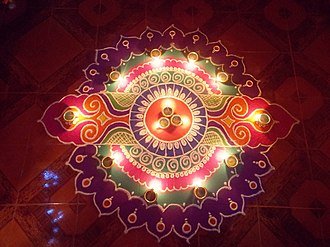
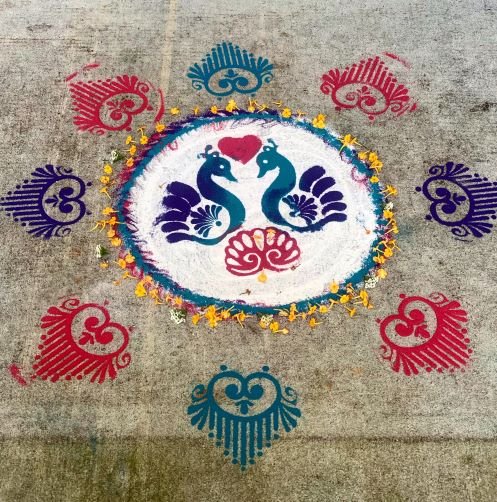
Rangoli design can be simple geometric shapes, floral shapes or they can also be very elaborate designs. Some common symbols used in Rangoli are peacocks, lotus flowers, mangoes, and fish. The most important element of Rangoli is being colorful!
Rangoli can be made on the floor, sidewalk, or entrances of homes. The materials used can easily be found in your pantry, yard, or a regular grocery store. Typical materials include rice flour (either plain or dyed), as well as lentils and beans to feed birds and ants.
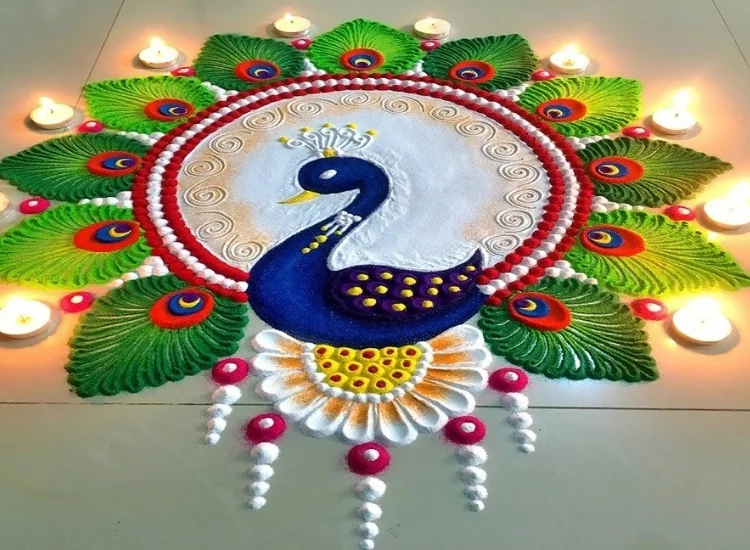
The peacock, with its stunning plumage, is often associated with wealth and abundance, making it a fitting motif for a festival that celebrates new beginnings and prosperity.
Create a stunning peacock rangoli , showcasing vibrant colours and intricate feather patterns.
Start by using bright colours for the peacock’s head, adding details like a beak and eye with contrasting colours.
This artistic representation symbolizes beauty and grace, making your festive décor truly enchanting.
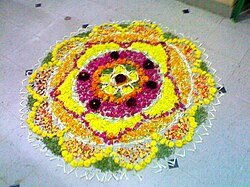
Rangoli have different names based on the state and culture. Rangoli hold a significant role in the everyday life of a Hindu household especially historically when the flooring of houses were untiled. They are usually made outside the threshold of the main entrance, in the early mornings after cleaning the area. Traditionally, the postures needed to make a rangoli are a kind of exercise for women to straighten their spines. The rangoli represents the happiness, positivity and liveliness of a household, and is intended to welcome Lakshmi, the goddess of wealth and good luck. It is believed that a Hindu household without a clean entrance and rangoli is an abode of daridra (bad luck).
The purpose of rangoli is beyond decoration. Traditionally either powdered calcite and limestone or cereal powders are used for the basic design. The limestone is capable of preventing insects from entering the household, and the cereal powders attract insects and keep them from entering the household. Using cereal powders for rangoli is also believed as [ because insects and other dust microbes are fed. Design depictions may vary as they reflect traditions, folklore, and practices that are unique to each area. Rangoli are traditionally made by girls or women, although men and boys create them as well. In a Hindu household, basic rangoli is an everyday practice.
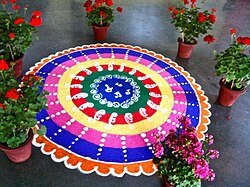
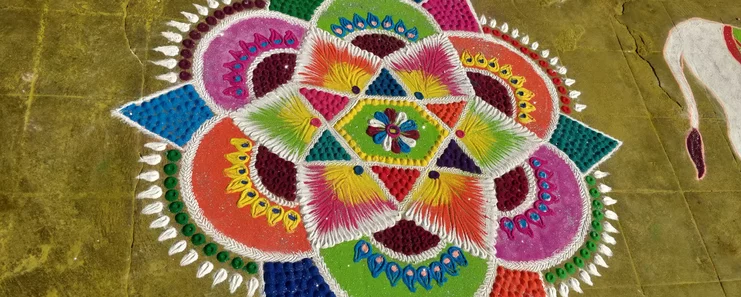
Since women rise very early to clean the surface before making intricate rangoli designs, it signifies purity, good fortune, and developing the aura of positivity.
The design atterns of the Rangoli are symbols of the lotus flower, other floral shapes, peacocks, mangoes, and fish. Although they are traditionally handed over generations, the colors have spiritual benefits. Devotees experience the serenity and the presence of divine energies when they make or see the rangoli designs.
The herald for good luck and of other special relevance, rangoli is a unique practice that depicts various art forms. Most Indian festivals are incomplete without Rangoli and Diwali is one of them. Rangoli designs are usually made with rice powder, colored sand, flowers, diyas, and petals on the floor surfaces of households. Along with glorifying the look of the house to mark the festivities, Rangoli is also believed to have spiritual significance.

Start Your Rangoli Journey
Ready to create your first rangoli?
Drop-in sessions: Anywhere between 1–2 hours, materials provided
Monthly courses: 4‑week series for sustained learning
Private tutorials: 1-on-1 spaces ideal for focused goals like bridal Rangoli, portrait painting, or teaching certification
Joiarly notification of Diwali masterclasses and weekly technique challenges.n our email list.